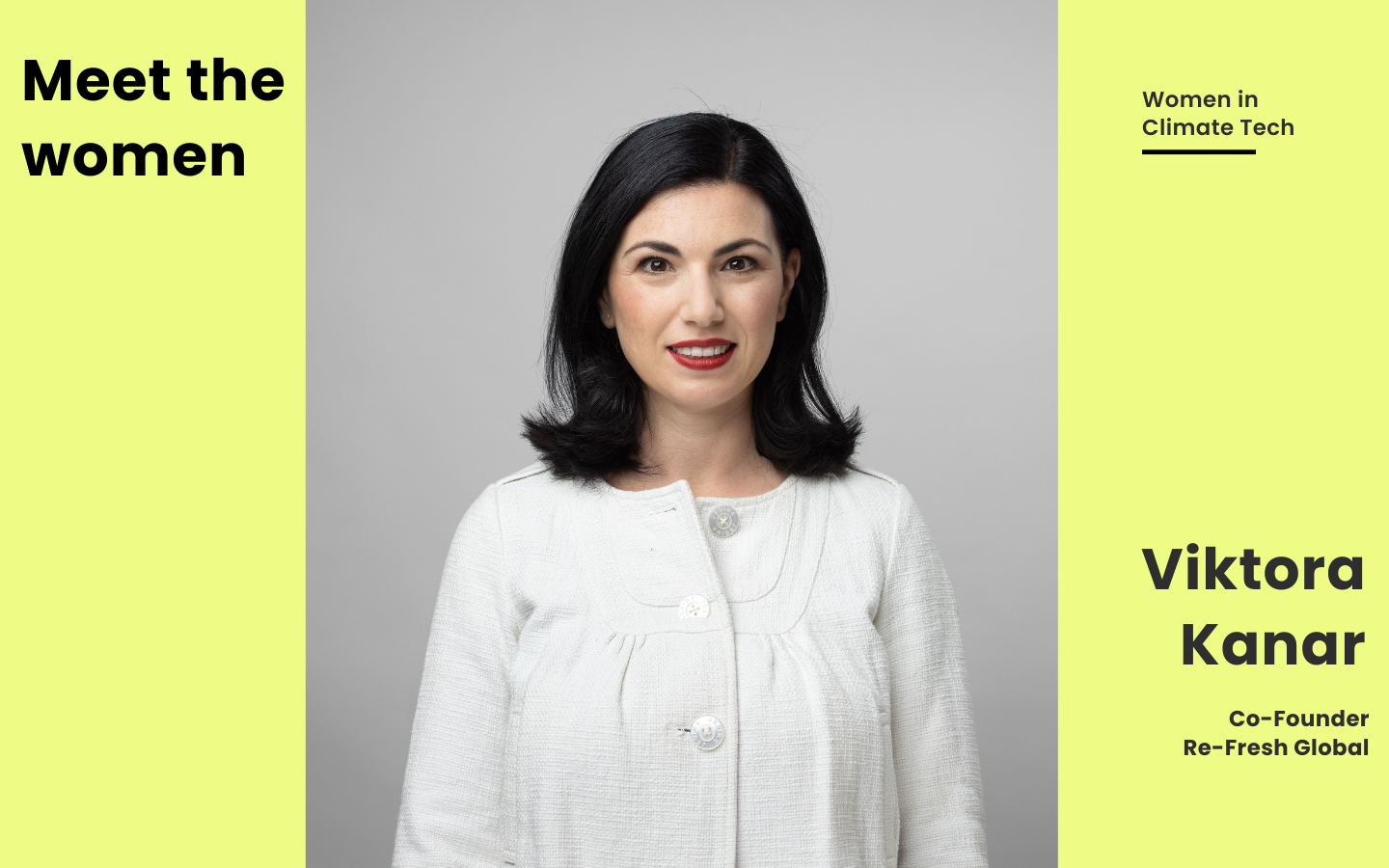
Viktoria Kanar, Co-Founder Re-Fresh Global
What was the very first moment that led you to tackle textile waste – and how did that idea evolve into what Re-Fresh Global is today?
The first time I realized that the industry has a problem was when I was working on a large, international, upscale campaign for the fashion industry, for a luxurious brand. I saw how much money, energy, and effort had been invested — only to contribute to manufacturing more, selling more, and leaving more waste behind, without considering what to do with it. That’s when I decided I want to be part of the solution, not the problem.
And while I was searching for the solution, I was sure that there must be more to all those discarded textiles and clothing than just the downcycling methods we’ve been relying on for decades.
How would you describe what Re-Fresh Global does to a 10-year-old child – and why it matters for our planet?
Actually my kids, when they were younger, used to tell people that what their mom does is take textile waste—waste from our clothing—and make perfume out of it. Which is actually true. That was one of our early projects, where we realized that we could create ethanol from the waste and then mix it with different fragrances and turn it into perfume.
And that, in a simple way, also describes what we do without going too deep into the technology: our invention can take textile waste and turn it into something really valuable for many different industries.
We envision cars running with materials made from textile waste. We envision cosmetic products, electronics, and so much more that can benefit from the materials we create from all the clothing and textiles we no longer need or use.
We explain our impact very simply: less than 15% of the world’s textiles are recycled. That means over 100 million tons end up in landfills or incinerators, causing serious harm to the planet and to our health. The need to change this is urgent.
You’re working with major players like the Volkswagen Group and furniture manufacturers. What have you learned from bringing circular materials into large-scale supply chains?
What surprised us early on was that large, well-known companies were the first to show interest and discuss collaborations. We expected working with big companies to be too complicated, and we understand that it is challenging, because our solution is new and requires changes to existing manufacturing processes.
Until the pressure to adopt fully sustainable production becomes unavoidable, it will still take time before every company wants materials like ours. But we’re encouraged that major players in automotive, fashion, and manufacturing are already talking to us. With growing experience across many well-known companies, we’re confident that integrating our materials into their operations will become easier over time.
From your perspective, what’s the biggest barrier slowing down the circular transformation – and if you could change one regulation, incentive, or industry norm tomorrow, what would it be?
Until clear regulations will require from companies to use a minimum percentage of recycled materials, integrating products like ours will take time. Companies also need stronger incentives to adopt recycled materials. For example, recycled polyester isn’t widely used yet, and many manufacturers rely on virgin polyester or PET from bottles, often resulting in greenwashing. Better alignment between government incentives and regulatory pressure is essential to motivate companies toward truly sustainable production.
As a female founder leading deep-tech innovation in a traditionally male-dominated sector, what challenges and opportunities have you encountered along the way?
Although more female executives and founders are entering deep tech, the space remains male-dominated. Female founders often face higher expectations and greater skepticism, while male founders tend to receive more openness and willingness to be given a chance.
Looking ahead to 2030, what’s your boldest vision for Re-Fresh Global and the future of circular materials?
We still face barriers, especially in convincing investors—both female and male—that we can deliver on our promises. It can be frustrating when female investors don’t fully support us, despite the innovation we’re bringing.
Still, we remain optimistic. By 2030, we envision that our SMART-UP system will be distributed worldwide, transforming local waste into valuable raw materials, benefiting communities, industries, and the planet. We hope that everyone who believes in sustainable industry will come forward and support this vision.
Follow Re-Fresh Global here to learn more about their story and connect with Viktoria Kanar via Linkedin.