Tonje Ørnholt, Founder ØRN Advisory and WICT Nordics Chapter Lead
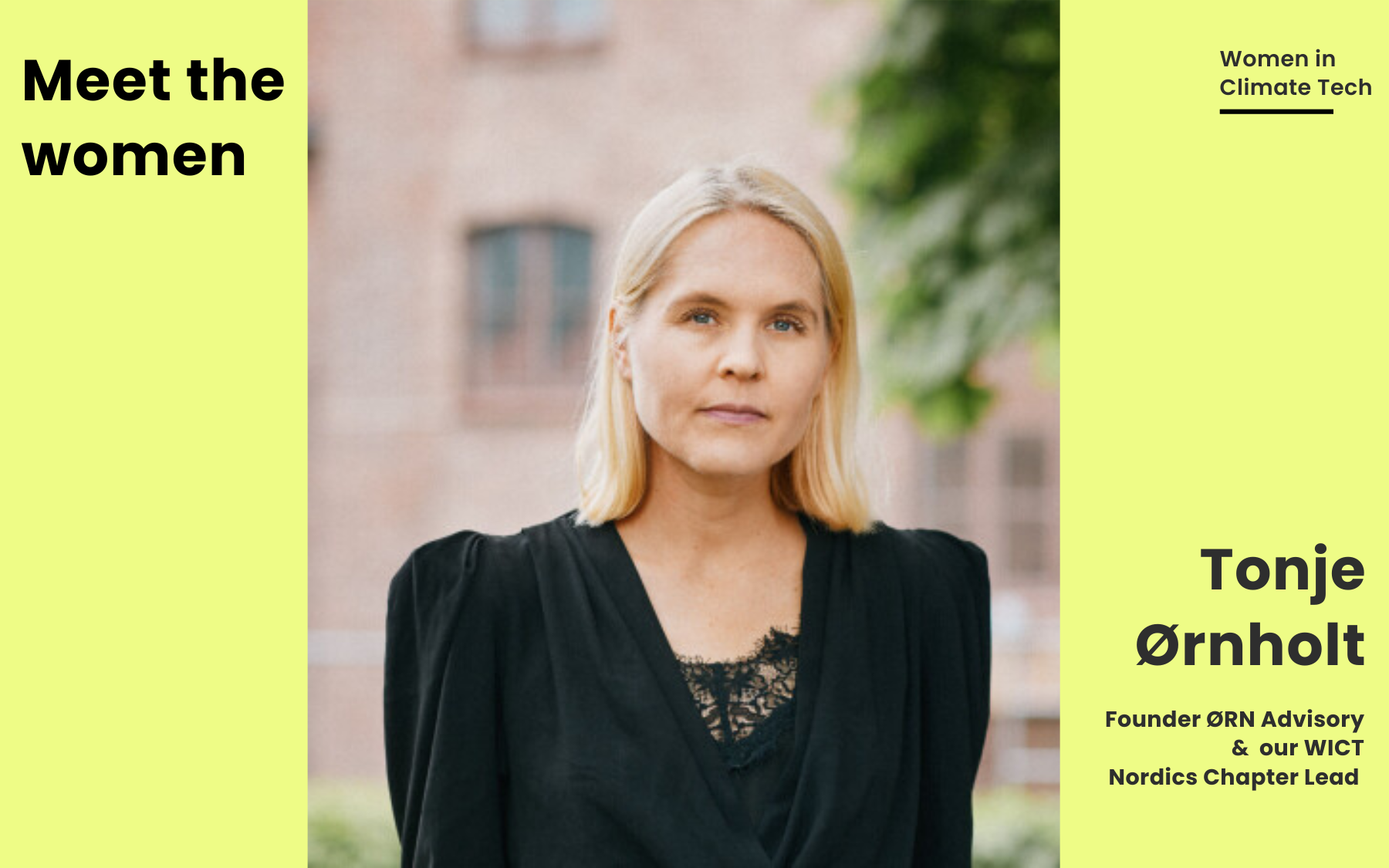
Your background spans philosophy, design thinking, ecosystem building and venture capital. How did these different experiences lead you to where you are today, and how do they shape the way you work now?
I have always followed my curiosity rather than a traditional career plan. Looking back, there is a clear thread running through everything I've done, even if it might not look that way from the outside.
I've always been interested in solving problems while creating something that has a positive impact. Philosophy taught me to question assumptions, design thinking gave me practical tools for solving problems, and working across the public sector, ecosystem building and venture has allowed me to see the innovation ecosystem from different perspectives.
I think that's how I work today as well. I enjoy connecting people, spotting opportunities and helping ideas move into action. Working across different parts of the ecosystem also helps me understand where the gaps are and how different stakeholders can work better together.
A central part of your work is connecting international investors with the Nordic ecosystem. Why is this bridge needed, and what makes building it more complex than it may appear from the outside?
The Nordics have a strong foundation. We have highly educated talent, strong research environments and top quality tech founders.
At the same time, we're small markets, so companies need to think internationally early on. Our early-stage venture ecosystem is strong, but we still need more international growth capital and experience on scaling companies globally.
Working with international investors, I see both sides. Many investors are curious about the Nordics, but they need time to understand the ecosystem and build confidence in it. Likewise, founders often underestimate how early they should start building relationships with international investors to get on their radar and build trust.
Having worked across the public sector, advisory and venture capital, what do you see as the Nordic region’s greatest competitive advantage in climate tech, and where is it still falling short?
One of the biggest strengths of the Nordic region is that we combine strong research, engineering talent and ambitious climate policies. Many founders are building companies around real industrial and climate challenges, and that gives the region a strong position internationally.
At the same time, climate tech has become a more difficult investment category over the last few years. That's a global trend, but it affects the Nordics because climate innovation has been such an important part of our ecosystem.
Going forward, I think we need continued long-term investment, stronger international partnerships and more capital to help companies scale beyond the Nordic market.
What do international investors most often misunderstand about Nordic founders and markets, and what could Nordic startups do better to attract global capital?
From the conversations I have with international investors, I don't think it's so much a misunderstanding. Many simply haven't spent enough time in the Nordic ecosystem yet. Once they visit and meet founders, they're often surprised by the quality of the companies and the technical depth.
If there's one thing Nordic founders could do better, it's telling a bigger story. We often build outstanding technology, but we're sometimes more reserved when communicating the scale of the opportunity. International investors are looking for companies that can become global category leaders, so founders need to communicate that ambition clearly from the beginning and back it up with evidence that they can execute on it.
What are you most proud of in your journey so far, and which professional decision required the most courage?
Starting my own business has definitely been the biggest leap. I'd never run a company before, so there were a lot of unknowns.
What I'm most proud of is that I've been able to build a sustainable business in a relatively short time while working on projects that genuinely interest me. It has also confirmed something I've realised about myself over the years: I really enjoy building things from scratch. I also know that I get bored if I can't combine strategy with execution. I like developing ideas, but I also want to be involved in making them happen.
Starting my own company has given me the opportunity to shape my own portfolio, work across different parts of the ecosystem and focus on the projects where I feel I can create the most value.
You took part in the WICT event last year when you were still working for the business development agency by the city of Oslo. What was your first experience of the community and what made you decide to take the role of Nordic Chapter Lead now?
I remember being really impressed by the community from the first event. It brought together founders, investors and ecosystem leaders in a way that felt both relevant and genuinely collaborative.
Climate change remains one of the biggest challenges we're facing, and we need more diversity among both founders and investors if we're going to build the best solutions.
Taking on the role as Nordic Chapter Lead is an opportunity I am genuinely excited about. It allows me to contribute to a community I believe in while using my Nordic network to create new connections and increase the visibility of Women in Climate Tech across the region.
Follow ØRN Advisory here to learn more about their story and connect with Tonje via Linkedin.